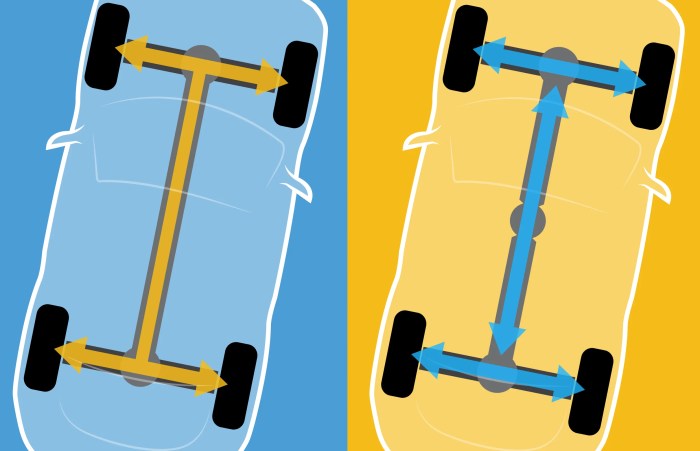
AWD vs 2WD SUV comparisons are essential for anyone considering a new vehicle. These two drivetrains cater to different driving needs, and understanding their distinctions can enhance your driving experience. Whether you’re navigating snowy roads or cruising on highways, each system offers unique advantages that can significantly impact performance and efficiency.
In this exploration, we’ll delve into the mechanics, benefits, and drawbacks of AWD and 2WD systems, while also highlighting how they stand up against each other in various scenarios. By the end, you’ll have a clearer perspective on which drivetrain might be the best fit for your lifestyle and driving habits.
AWD vs 2WD Overview
The choice between All-Wheel Drive (AWD) and Two-Wheel Drive (2WD) systems can significantly impact the driving experience. Understanding the fundamental differences between these two drivetrain configurations is essential for making an informed decision when purchasing an SUV. AWD systems are designed to provide power to all four wheels simultaneously, enhancing traction and stability on slippery or uneven terrains. In contrast, 2WD systems send power to either the front or rear wheels only, making them generally more fuel-efficient and simpler in terms of maintenance.AWD utilizes a complex system of differentials, transfer cases, and sensors to detect road conditions and distribute power accordingly.
This makes it ideal for off-road adventures or driving in adverse weather conditions. On the other hand, 2WD systems are often lighter and more straightforward, with fewer components, which can lead to lower maintenance costs. While AWD excels in performance during challenging conditions, 2WD vehicles often provide better fuel efficiency and are typically less expensive to purchase.
Performance Comparisons
Performance varies substantially between AWD and 2WD SUVs depending on the driving conditions. In rainy, snowy, or off-road situations, AWD systems provide superior traction, allowing vehicles to accelerate and handle better. For example, the Subaru Outback, with its AWD system, is known for its robust performance in harsh weather, while the Honda CR-V in its 2WD configuration often shines in urban environments where fuel efficiency is prioritized.Statistics show that AWD SUVs generally outperform their 2WD counterparts in acceleration, handling, and braking on slippery surfaces.
For instance, a typical AWD SUV can accelerate from 0 to 60 mph in around 7 seconds under wet conditions, whereas a 2WD SUV might take slightly longer due to reduced traction. The braking distance is shorter for AWD vehicles in these conditions, further highlighting the performance benefits of AWD systems.
Cost Implications
When it comes to cost, there’s a noticeable difference between AWD and 2WD SUVs. Generally, AWD models tend to have a higher upfront price, with some models carrying a premium of $2,000 to $3,000 more than their 2WD counterparts. Maintenance costs also vary, as AWD systems often require additional servicing.
| Aspect | AWD | 2WD |
|---|---|---|
| Initial Cost | Higher ($2,000 – $3,000 more) | Lower |
| Maintenance Costs | Moderate to High | Lower |
| Insurance Rates | Generally Higher | Generally Lower |
Insurance implications also differ, as AWD vehicles may attract higher premiums due to their capability and performance. Resale values tend to be higher for AWD SUVs in regions with harsh weather, while 2WD vehicles may hold their value better in urban areas.
Fuel Efficiency
Fuel efficiency is a key consideration for many buyers. Generally, 2WD SUVs are more economical, achieving better miles per gallon (MPG) due to their lighter weight and less complex drivetrain. For example, a typical 2WD SUV might average 25 MPG, while an AWD version of the same model could average only 22 MPG.In urban driving scenarios, the weight of the AWD systems can lead to greater fuel consumption, while on the highway, the difference may be less pronounced.
Emissions data also reveals that 2WD vehicles tend to produce lower CO2 emissions compared to AWD vehicles, making them a more environmentally friendly option for city driving.
Buying Considerations
Prospective buyers need to weigh various factors when choosing between AWD and 2WD. Factors such as climate, terrain, and intended use play crucial roles in this decision. For instance, individuals living in snowy regions or those who frequently venture off-road may prioritize an AWD system. Regional influences significantly impact buying decisions; for example:
- In snowy or mountainous areas, AWD is often preferred.
- In urban settings, 2WD is favored for its cost-effectiveness.
- Buyers should also consider the availability of service centers for AWD systems.
Key questions buyers should ask include:
- What is the typical fuel economy for both configurations?
- How does each drivetrain perform in adverse conditions?
- What are the long-term maintenance costs associated with AWD vs 2WD?
Automotive Buying Trends
Current trends in the automotive market show a growing interest in AWD SUVs, particularly in regions where weather conditions necessitate enhanced traction. Consumer preferences have shifted towards vehicles that offer a balance of performance and fuel efficiency. The sales figures indicate that AWD SUVs have seen a growth rate of approximately 15% in recent years, while the demand for 2WD models has remained stable.Statistics reveal that consumers are increasingly willing to pay a premium for AWD capabilities, reflecting a broader trend toward adventure-ready vehicles.
This shift is not just about performance; buyers are also looking for vehicles that can offer versatility for both daily commuting and weekend escapades.
Automotive Auctions
At automotive auctions, AWD and 2WD vehicles are valued differently based on their perceived utility and demand. AWD vehicles often command higher prices, especially in regions prone to inclement weather, where their capabilities are highly sought after.Tips for buying AWD vs 2WD SUVs at auctions include:
- Check the vehicle’s condition, especially the drivetrain components.
- Research historical auction prices for similar models.
- Verify the vehicle history report for any past issues.
Popular auction platforms that focus on SUVs include:
- Bring a Trailer
- Copart
- Barrett-Jackson
Car Detailing and Customization
AWD and 2WD SUVs might differ in customization options for performance and aesthetics. Owners of AWD SUVs often seek enhancements that improve traction and handling, such as upgraded suspension systems or performance tires. Meanwhile, 2WD owners might focus more on aesthetic modifications or fuel efficiency improvements.Detailing tips for both systems can vary. For AWD vehicles, keeping the drivetrain clean and well-lubricated is critical, while 2WD systems may require more attention to the front or rear differential, depending on the configuration.Performance enhancements can include:
- Installing a performance exhaust system for better airflow.
- Upgrading to high-performance brakes for improved stopping power.
- Enhancing suspension systems for better handling.
Hybrid and Energy Efficiency
The landscape of hybrid SUVs shows a growing presence of both AWD and 2WD options. Hybrid technology often influences the decision between these drivetrains, as manufacturers aim to balance performance with energy efficiency. AWD hybrids typically provide better traction and stability, making them suitable for various terrains, while 2WD hybrids focus more on fuel efficiency. In urban settings, 2WD hybrids tend to perform better in terms of energy consumption, while AWD hybrids may excel in rural environments where off-road capability is essential.
Specific SUV Examples
When comparing specific models, it’s evident that AWD and 2WD SUVs serve different purposes. For instance, the Toyota RAV4 comes in both configurations, with the AWD variant performing better in off-road conditions while the 2WD version offers enhanced fuel efficiency for city driving.A summary of specifications and features for selected models might look as follows:
| Model | AWD Specs | 2WD Specs |
|---|---|---|
| Toyota RAV4 | 27 MPG, 0-60 in 7.8 sec | 30 MPG, 0-60 in 8.2 sec |
| Subaru Outback | 26 MPG, 0-60 in 8 sec | 28 MPG, 0-60 in 8.5 sec |
Personal stories from owners emphasize how AWD provides peace of mind during winter months, while 2WD owners appreciate the savings and ease of maintenance.
Motorcycle and Automotive Intersections
The application of AWD technology extends beyond SUVs into motorcycle design and performance. Similar principles of power distribution apply, although the mechanics differ significantly. Innovations in AWD technology have influenced both SUVs and motorcycles, enhancing traction and stability.For example, some motorcycles now feature AWD systems that allow for better handling on various terrains, paralleling the benefits seen in SUVs. This intersection of technology continues to evolve, showcasing how advancements in one area can benefit another.
Automotive Repairs
Common repairs for AWD systems often involve differentials and transfer cases, which can be more complex and costly than repairs for 2WD systems. Regular servicing is crucial for both drivetrains to ensure longevity and reliability.A DIY maintenance guide might include steps for:
- Checking and changing the differential fluid regularly.
- Inspecting the transfer case for leaks or damage.
- Performing tire rotations to ensure even wear.
The importance of regular inspections cannot be overstated for both AWD and 2WD systems, as neglecting maintenance can lead to costly repairs down the line.
Classic Cars and Modern Comparisons
The evolution of drivetrain systems from classic cars to modern SUVs reflects significant advancements in technology. Classic SUVs often relied on 2WD systems, while modern iterations frequently offer AWD options for improved performance and versatility.Classic models known for their drivetrain types include:
- Jeep Wagoneer (4WD)
- Ford Bronco (4WD)
- Chevrolet Blazer (4WD)
In contrast, contemporary models showcase a variety of AWD and 2WD options, reflecting consumer demands for versatility and performance.
Future Trends
Looking ahead, the landscape for AWD and 2WD SUVs is expected to evolve with technological advancements, including electric vehicles. As electric propulsion systems become more prevalent, the debate between AWD and 2WD may shift, as electric motors can provide instant torque to all wheels without the weight of traditional AWD systems.Predictions indicate that consumer preferences may lean towards AWD models due to their enhanced safety and performance capabilities in diverse driving conditions.
With the growing focus on sustainability, manufacturers will likely continue to innovate, ensuring that both AWD and 2WD options remain relevant in the ever-changing automotive landscape.
Wrap-Up
In summary, the decision between AWD and 2WD SUVs hinges on several factors including performance, fuel efficiency, and personal driving preferences. As we’ve seen, both systems have their unique strengths and potential drawbacks. Understanding these aspects can empower you to make an informed choice that aligns with your needs, whether that’s tackling rugged terrains or optimizing for better fuel economy on city streets.
FAQ Guide
What terrains are AWD SUVs best for?
AWD SUVs excel in various terrains, especially in off-road conditions, snow, and wet surfaces where enhanced traction is beneficial.
Are AWD SUVs more expensive to maintain than 2WD?
Generally, AWD SUVs can have higher maintenance costs due to more complex mechanical systems and additional components.
Do AWD vehicles consume more fuel than 2WD?
Yes, AWD vehicles typically consume more fuel than 2WD due to the extra weight and power required to drive all four wheels.
Which drivetrain is better for city driving?
2WD vehicles are often better for city driving as they are usually lighter and more fuel-efficient in urban settings.
Can I switch between AWD and 2WD?
Some vehicles offer a switchable system, allowing drivers to toggle between AWD and 2WD, providing flexibility based on conditions.


